Read time
4min
Published
19 Jul 2026
Today’s property market is being shaped less by national headlines and more by local conditions. Here’s what buyers and investors should be paying attention to.
Recently, several clients have asked for my view on Australia’s property market. Some are considering their first investment property, while others are deciding whether to add to an existing portfolio.
I’m not a property specialist, but I have reviewed the latest research and market data to form a broad view of what is happening. I have put it into plain English here because the more useful question is not simply whether property prices are rising or falling—it is what the current environment means for your own financial decisions.
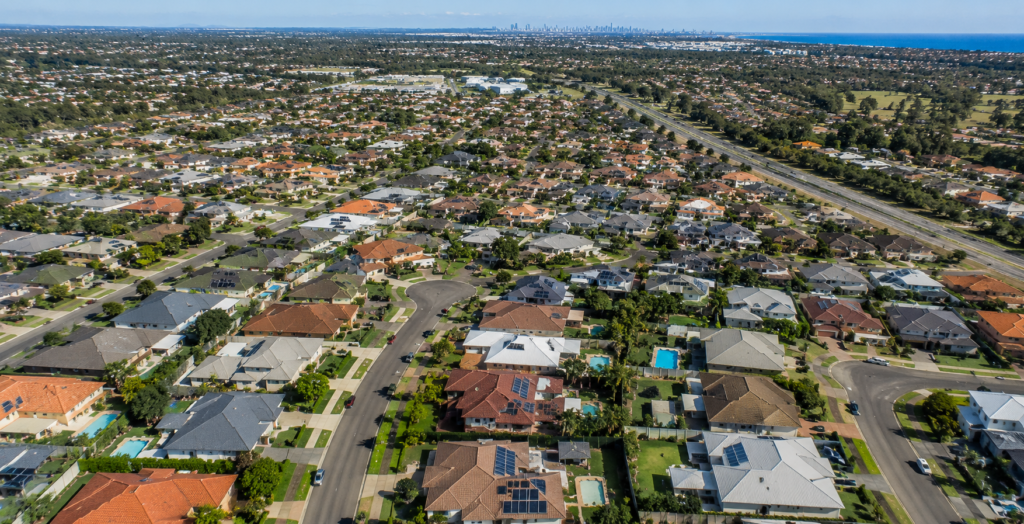
The headlines often describe “the Australian property market” as though it were one market moving in a single direction. In reality, national figures can hide the factors that matter most to an individual buyer: local employment, population growth, housing supply, rental demand, infrastructure investment and affordability.
Even within the same suburb, two properties obviously can perform very differently depending on their location, land value, condition, ongoing costs and appeal to future buyers or tenants. That is why broad market commentary should be treated as a starting point, not as a reason to buy.
The national figures only tell part of the story
Australia’s residential property market is valued at almost $12.8 trillion, across more than 11.49 million dwellings. The average dwelling value is now just over $1.11 million. Those figures demonstrate the size and long-term significance of residential property in Australia, but they do not tell an investor where to buy—or whether property is suitable for them at all. Recent data shows stronger growth in Queensland and Western Australia, while Victoria has been comparatively subdued and New South Wales has recorded more modest growth. In 2025 the annual growth of the average price of Australian dwellings grew by:
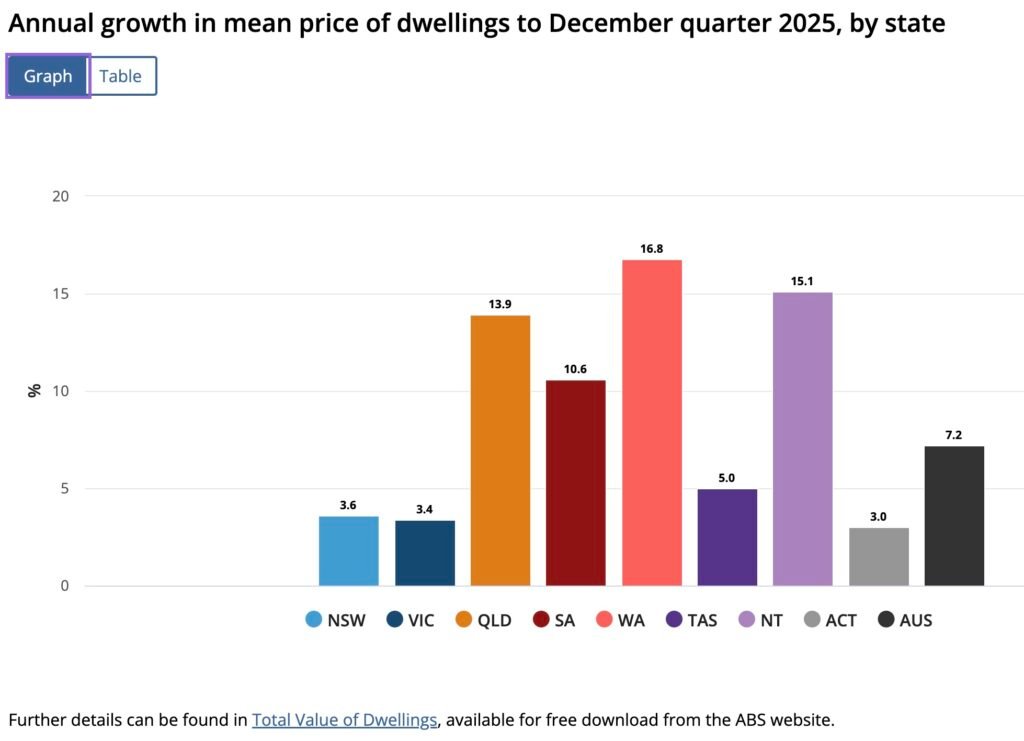
The important point is not simply that each state is performing differently. It is that growth tends to follow underlying demand, limited supply and affordability—not headlines alone. For me, the practical takeaway is this: rather than asking whether the Australian property market is “good” or “bad”, buyers should ask whether a particular property, in a particular location, supports their long-term strategy and remains affordable under less favourable conditions.
Interest rates have changed the rules
Higher interest rates have significantly reduced borrowing power. For many Australians, the maximum amount they can borrow is now substantially lower than it was during the period of record-low interest rates. That has naturally reduced competition in many markets.
We’re now seeing:
- lower auction clearance rates
- more properties available for sale
- buyers taking longer to make decisions
- greater negotiating power in many parts of Sydney and Melbourne.
Ironically, this may actually benefit well-prepared buyers. When markets become less emotional, good decisions become easier to make.
Supply is still australia’s biggest long-term challenge
While demand has softened in some locations, Australia’s housing shortage hasn’t disappeared. Population growth continues to outpace new housing construction in many parts of the country. Labour shortages, elevated building costs and planning delays continue to restrict the number of new homes entering the market. This imbalance between supply and demand is one of the key reasons we haven’t seen the widespread property price correction many commentators predicted several years ago.
Every capital city has its own story
Rather than asking whether Australia’s property market is rising or falling, I believe investors should be asking which cities have the strongest underlying fundamentals.
Sydney remains Australia’s most expensive housing market, with the average dwelling now worth around $1.32 million. While higher interest rates and affordability pressures have softened buyer demand, Sydney’s long-term supply constraints continue to support values over time.
Melbourne has become a fascinating market to watch. With average dwelling values around $947,000, it’s now considerably more affordable than Sydney. Some economists expect values to soften further during 2026 before recovering as population growth and limited housing supply begin supporting prices again.
Brisbane continues to benefit from interstate migration, infrastructure investment and one of Australia’s largest housing supply gaps. While growth is expected to moderate, its long-term fundamentals remain strong.
Perth has been one of Australia’s standout performers. Average dwelling values have now exceeded $1.1 million, driven by population growth, a resilient resources sector and limited housing supply. The challenge for investors is deciding whether today’s growth has already priced in tomorrow’s opportunity.
What does it mean to you?
One of the biggest mistakes I see is investors chasing yesterday’s best-performing suburb. Past performance rarely guarantees future returns. Instead, I encourage clients to focus on factors they can measure:
- employment growth
- population trends
- infrastructure investment
- housing supply
- rental demand
- cash flow
- long-term affordability.
These are the fundamentals that tend to drive sustainable property performance over time. I don’t believe Australia is heading for either a nationwide property boom or a dramatic housing crash. Instead, I expect the market to remain selective.
Some locations will continue outperforming because they have strong economic fundamentals. Others may experience slower growth while affordability catches up or supply improves. That’s why I believe the better question isn’t:
“Is now the right time to buy?” It’s: “Am I buying the right property, in the right location, for the right reasons?”
Good investing has never been about perfectly timing the market. It’s about making informed decisions based on quality research, realistic expectations and a long-term strategy.
As always, every financial decision should be considered within the context of your broader financial goals, cash flow and risk tolerance—not simply what’s making headlines this week.
This article contains general information only and does not consider your personal objectives, financial situation or needs. Property markets can change, and past performance is not a reliable indicator of future results.
Call to action
If you want to chat more, please book a free 30 min call here
Resources: